
The most common method of breast reconstruction currently performed in the United States uses staged tissue expansion and breast implants. This method of breast reconstruction is generally reserved for patients who are not candidates for, do not want, or do not have adequate tissue for a flap reconstruction.
Implant Reconstruction San Diego


How Implant Reconstruction Works in San Diego & Encinitas
A breast implant (either saline or silicone) is used to reconstruct the missing breast tissue resulting from a mastectomy. For best results, the implant is placed beneath the pectoralis muscle in the chest wall. Since this muscle is quite adherent to the chest wall, there is usually not enough room behind the muscle to place a large enough implant to restore adequate breast shape and size. Therefore, board-certified plastic surgeon Dr. Gupta will use a technique called tissue expansion. Skin and muscle have elastic properties.
They will stretch when placed under tension. We have all seen examples of this during pregnancy when an expectant mother’s abdominal skin and muscles stretch to accommodate the rapidly growing uterus. Stretch marks occur if the skin is stretched too rapidly. Dr. Gupta uses a similar technique to stretch the pectoralis muscle and breast skin to make enough room for a large enough breast implant. The breast tissue is stretched more slowly—over a period of three months—to avoid stretch marks.
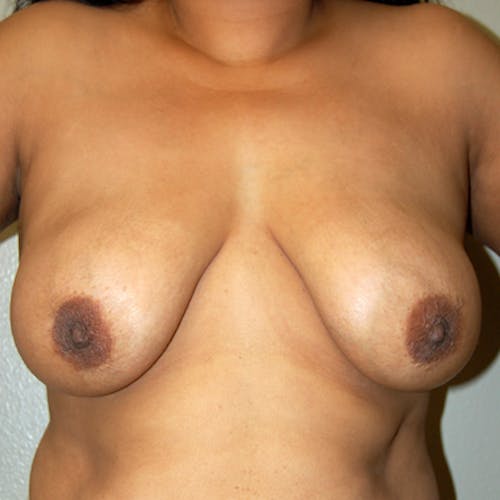
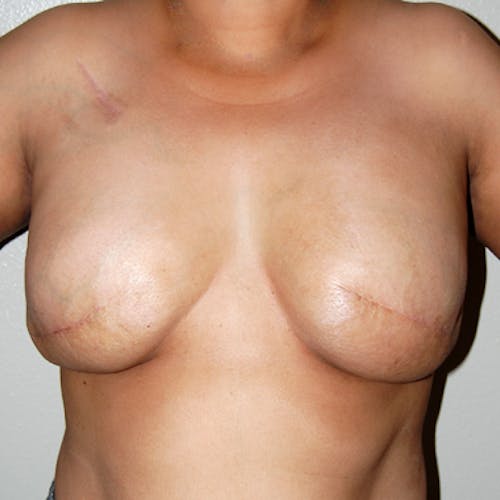
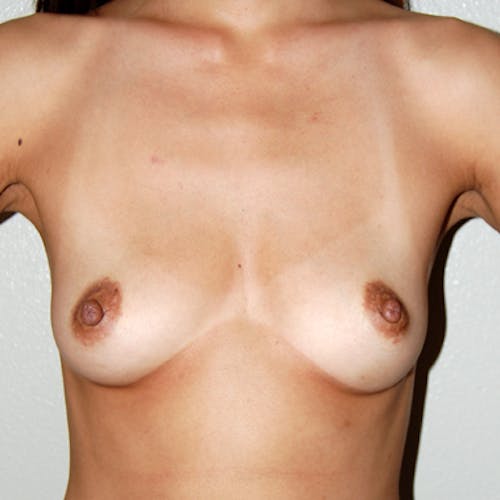
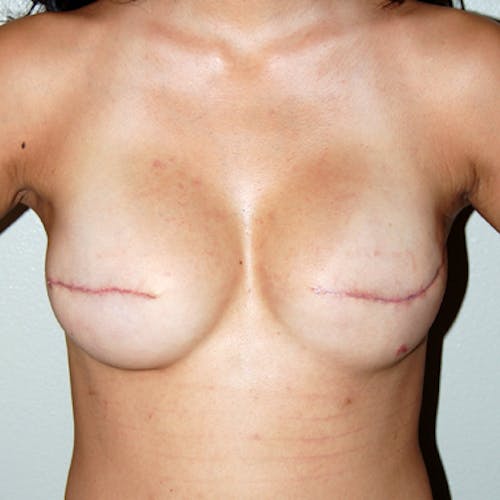
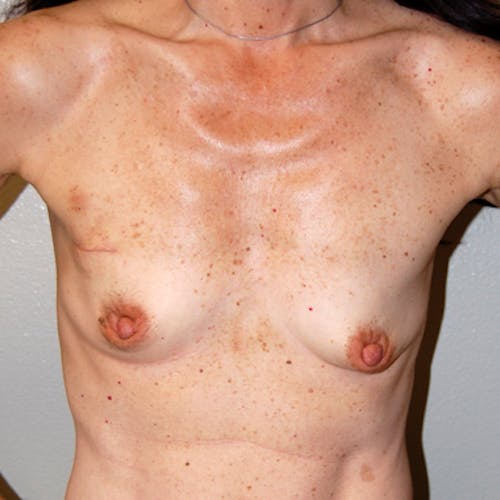
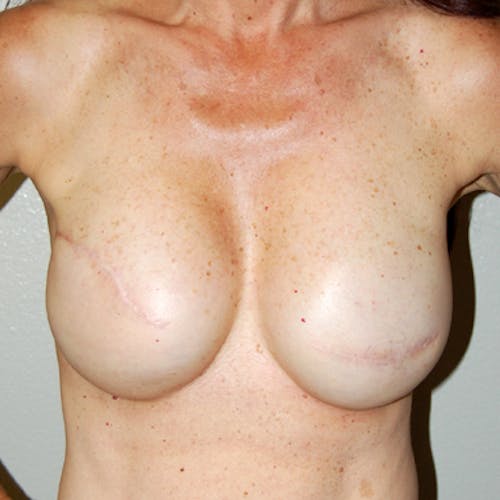
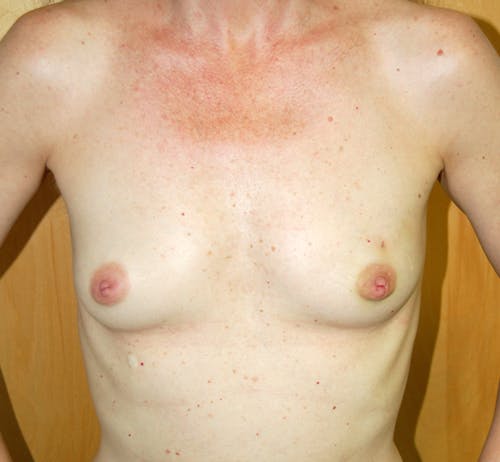
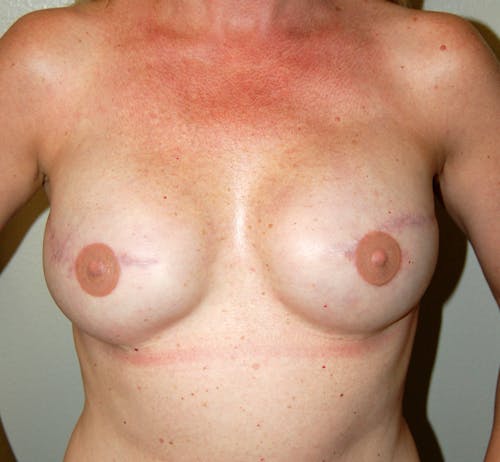
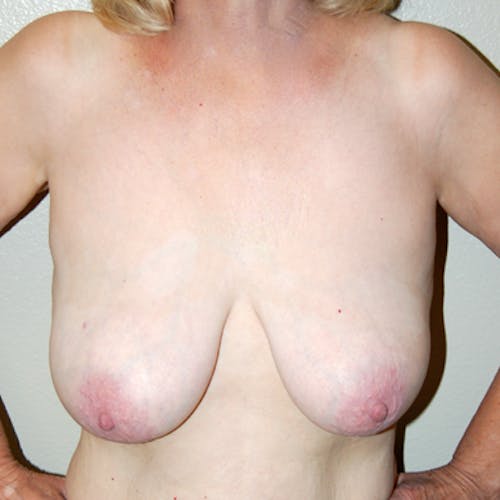
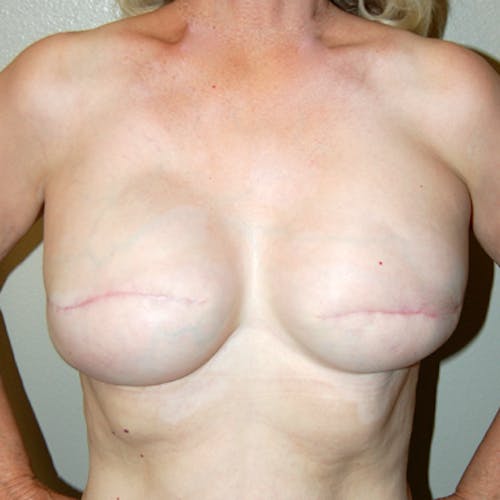
San Diego Breast Implant Procedure
Stage 1: Tissue Expander Placement
The first stage involves placement of an empty tissue expander underneath the pectoralis muscle and the skin. This can be done at the time of the mastectomy (immediate reconstruction) or after the mastectomy has healed (delayed reconstruction). Expanders are temporary implants filled with salt water (saline). Dr. Gupta will usually fill some fluid into the expander at the time of the initial insertion procedure. To improve the results of the reconstruction and to create a more natural breast shape and texture, Dr. Gupta uses a tissue graft to cover the bottom part of the implant below the pectoralis muscle. This creates an internal breast sling to support the implant and reconstructs the natural teardrop shape of the breast. This stage takes 45 minutes to an hour and can be done as an outpatient procedure.
Stage 2: Gradual Expansion
Once the incision has healed, Dr. Gupta will start to gradually fill the tissue expander with sterile saline.
This is performed by placing a small needle through the skin into an injection port built into the front of the expander. Dr. Gupta will fill the implant with small amounts of saline every one to two weeks to gradually expand the breast tissue.
This expansion process will usually take between two and three months, depending on the patient’s skin characteristics and her desired reconstructed breast size.
Stage 3: Implant Placement
Once the tissue expander has been adequately filled to achieve the correct reconstruction size, the second stage of reconstruction is planned. In this outpatient procedure, Dr. Gupta will remove the tissue expander and replace it with a permanent implant to reconstruct adequate breast size, shape, and projection. It is at this stage that the patient and Dr. Gupta will decide whether to use a saline or silicone implant.
This second stage is also when Dr. Gupta will perform reconstruction of the non-cancer contralateral (opposite) breast to achieve symmetry. This may include a mastopexy (breast lift), breast reduction, breast augmentation, or combined mastopexy and augmentation. This stage takes 45 minutes to two hours and is done as an outpatient procedure.

Nipple and Areola Reconstruction
Approximately three to four months following the placement of the breast implants, Dr. Gupta will plan the nipple-areola reconstruction to complete the breast reconstruction process.
Overall, from start to finish, the process usually takes approximately six or seven months.

*Actual Patient.
Single-Stage Reconstruction
Some patients are candidates for a single-step breast reconstruction procedure whereby a permanent implant is inserted immediately following the mastectomy. This eliminates the use of an expander and the whole expansion process.
In the one-step reconstruction, the breast implant is completely covered by the pectoralis muscle and an acellular tissue graft (such as AlloDerm). Dr. Gupta usually reserves this single-stage procedure for patients undergoing prophylactic mastectomy or those who desire an A or B cup reconstruction.

Implant Reconstruction Frequently Asked Questions
How do I know if implant reconstruction is the right option for me?
Implant-based reconstruction may be appropriate if you prefer a shorter surgery, want to avoid flap procedures, do not have enough donor tissue for a flap, or prefer a more straightforward recovery. During consultation, Dr. Gupta reviews your cancer treatment plan, anatomy, and goals to determine whether a two-stage or single-stage implant approach is ideal.
Is implant reconstruction safe if I am receiving chemotherapy or radiation?
Many women undergo implant reconstruction while receiving or planning systemic treatment. Chemotherapy does not typically interfere with tissue expansion. Radiation, however, can impact skin quality, healing, and long-term aesthetic results. Dr. Gupta works closely with your oncology team to plan the safest timing and evaluate whether implants or flap-based reconstruction will provide the most predictable outcome.
What does a tissue expander feel like?
A tissue expander feels firmer and more rigid than a final implant. Most patients describe a feeling of pressure or tightness as expansion progresses. This sensation is temporary and improves once the permanent implant is placed.
Will I be able to choose the size and type of my implants?
Yes. Dr. Gupta discusses your expectations, frame, and lifestyle to help guide implant selection. The expander process allows you to “preview” volume during expansion. At the final stage, you’ll choose between saline and silicone implants and determine your preferred size and projection.
What is the recovery like between the stages?
After expander placement, many patients return to their daily routines within a week or two. Expansion visits are quick and usually well tolerated. The second stage—implant placement—tends to have an easier recovery than the first, since no new pocket creation is needed.
Do implants after mastectomy feel the same as cosmetic breast implants?
Not exactly. Because mastectomy removes breast tissue and often tightens the skin envelope, reconstructed breasts have a different feel compared to augmentation in native breast tissue. Silicone implants tend to feel more natural than saline, and the use of acellular dermal grafts helps improve softness and contour.
Will I still have sensation in my breasts after reconstruction?
Breast and nipple sensation changes after mastectomy, regardless of reconstruction method. Some patients regain partial sensation over time, while others do not. Sensation depends on nerve preservation during mastectomy rather than the reconstruction technique itself.
How long does an implant reconstruction last?
Breast implants are not considered lifetime devices, but many women keep the same implants for years without replacement. Reasons for revision may include capsular contracture, implant rupture, asymmetry, or changes in aesthetic goals. Dr. Gupta monitors your reconstruction long-term to detect early changes.
What is capsular contracture, and how is it managed?
Capsular contracture occurs when scar tissue around the implant becomes firm or tight. It is uncommon but can affect shape or comfort. Management may involve medication, massage techniques, or surgical correction. Placing implants under the muscle and using tissue grafts reduces risk.
How long does the full reconstruction process take?
For two-stage reconstruction, the timeline from expander placement to nipple reconstruction typically spans six to seven months. Patients choosing single-stage reconstruction complete the implant portion immediately, but may still undergo nipple reconstruction several months later.
Can reconstruction be performed years after a mastectomy?
Yes. Many patients pursue delayed reconstruction months or even years after their cancer treatment. Tissue expanders can still be placed beneath the pectoralis muscle, and symmetry procedures can be performed on the opposite breast when appropriate.
Will my reconstructed breasts look natural?
Dr. Gupta carefully shapes the implant pocket, uses supportive grafts, and performs symmetry procedures when needed to create a natural, proportional result. While reconstructed breasts will not behave exactly like natural breast tissue, most patients enjoy a soft, balanced appearance in and out of clothing.
Is nipple and areola reconstruction required?
It is optional. Many women choose it to complete the aesthetic restoration, while others achieve a natural appearance using 3D tattooing alone. Dr. Gupta discusses all available techniques—including surgical reconstruction and medical tattooing—to help you determine what feels right for you.
Can I still undergo screening for breast cancer after implant reconstruction?
Women with mastectomy and reconstruction typically do not require routine mammograms on the reconstructed side. If you still have natural breast tissue on the opposite side, that breast will continue to be screened normally. Your oncology team will provide personalized follow-up recommendations.